Waiting for the Dawn
Ruth Ann Stites, Staff Writer
The Rijksmuseum is considered one of the ten best art museums in the world. Located in a classic Gothic Revival style building in Amsterdam designed for it in 1885, the museum houses the national art collection of the Netherlands. The Rijksmuseum’s history goes back to 1808 when Louis Bonapart, king of Holland and brother to Napoleon, created a royal collection of art including sculptures, antiquities, objets d’art, as well as paintings and drawings. After the Bonaparts were ousted, the collection was opened to the public as the Rijksmuseum te Amsterdam in 1815.
The museum is best known for its collection of paintings of the Dutch Golden Age Baroque masters from the 17th century. And the crown jewel of the collection is Rembrandt’s masterpiece, “The Night Watch.”[1] The large painting, 12.4 by 14.9 feet, does not belong to the museum but is on permanent loan from the City of Amsterdam. It has been housed with the nation’s treasures since the creation of the royal collection in 1808.
The original title of this great work of art was “Militia Company of District II Under the Command of Captain Frans Banninck Cocq” and is a group portrait of the militia company. Its current name comes from the late 18th century, when, with its varnish darkened by time, the picture was interpreted as a night scene rather than one taking place during the day. Militia companies like this one were originally formed as a civic guard to protect Amsterdam. By 1642, when the painting was finished, these companies had become ceremonial rather than military. Nonetheless, the dramatic, action-packed canvas creates the sense of a company ready to undertake its duty to protect its city. They are, in our imagination at least, ready to go on watch as night comes.
The concept of setting a guard, especially during the night, is so ancient that its roots must go back to the first humans facing a hostile world. It is little wonder that even prehistoric settlements provided places designed for watchers. The earliest undisputed archeological evidence of a walled city with sentinel platforms was found in ancient Jericho (known as Tell es-Sultan) and dates to around 8,000 BC.
It is unsurprising that the Bible mentions watchmen on the walls so frequently. Being a watchman in ancient Israel was an important job not to be shirked. Ezekiel spoke of the duties of a watchman as he prophesied, “But if the watchman sees the sword coming and does not blow the trumpet to warn the people and the sword comes and takes someone’s life, that person’s life will be taken because of their sin, but I will hold the watchman accountable for their blood” (Ezek. 33:6). This “Rule of the Wall,” holding a watchman liable for failing to do his duty, dates back almost 4,000 years in the early law codes of the ancient Near East. Their duty may be summarized this way:
The role of a watchman carries significant moral and ethical implications. It underscores the importance of responsibility, accountability, and the courage to speak the truth, even when it is unpopular or difficult. The watchman must possess integrity and a deep commitment to the well-being of those they serve, prioritizing their duty over personal comfort or safety.[2]
The importance of the task of a watchman and its implications for both individuals and communities go beyond their function to warn people of danger. The watchman on the wall became both an Old and New Testament metaphor, which includes prophecy (Ezek. 33:7; Hab. 2:1), intercessory prayer (Isa. 62:6; Eph. 6:18), spiritual leadership (Ezek. 3:17; Acts 20:28; Heb. 13:17), and believers’ alertness (I Peter 5:8-9).
The image of a watchman looking for the coming of dawn found in Psalm 130:6 is a reference that would be easily understood by the people of ancient Israel. The exact date of this psalm’s creation, as well as its authorship, is unknown, but three periods are suggested: during King David’s rule (1010-970 BC), when Hezekiah faced the Assyrians (around 701 BC), or during the Babylonian exile (586-515 BC). While used more literally than metaphorically during King David’s time, the watchman as a metaphor was fully developed in both later periods. It is also important to remember that the psalms were written following the rules of Hebrew poetry. There is a reason Psalm 130:6 says, “I wait for the Lord more than watchmen wait for the morning, more than watchmen wait for the morning.” This repetition was important both structurally and to emphasize the nature of the watchman’s actions:
Hebrew poetry often uses repetition to strengthen emphasis rather than merely add new information. A watchman on the night shift knows morning will come. He cannot command it to arrive, but he looks for it with focused desire because its arrival ends the darkness and confirms that the appointed order continues.
The comparison is stronger than ordinary patience. The psalmist’s longing for the Lord exceeds the watchman’s longing for daylight. Yet the image also conveys certainty. The worshiper has already grounded hope in God’s word. He waits through darkness because the Lord’s character and promise are more reliable than the visible cycle of night and dawn.[3]
Just as the psalmist goes from crying out for mercy to hoping for forgiveness to waiting for “morning,” when we pray, we should feel freedom to bring our woes, fears, and needs before God. We can cry out from the depths of our troubled souls because we have as much assurance of His answer coming as does the watchman looking for the coming of the dawn. It may seem to take forever, but it will come, and so do God’s answers. It is a certainty, but the wait may be long and agonizing.
The poetic comparison must not be turned into a mechanical promise that every illness, grief, consequence, or persecution ends within hours. Some faithful believers wait through a lifetime and receive final relief in resurrection. The verse promises no schedule. It teaches the posture and ground of hope.[4]
As we pray, we watch and we wait for something that is as sure as the coming of dawn and as elusive. But because God is who He is, we have the hope expressed in the following verse: “Israel, put your hope in the Lord, for with the Lord is unfailing love and with him is full redemption” (Ps. 130:7). This passage should remind us to always put hope into our prayers, even in the worst of circumstances.
Reflection Questions:
1. Rembrandt’s “The Night Watch” gives us a vivid image of watchmen. What images or objects bring a watchman to mind for you? How important does the concept of a watchman seem?
2. In spiritual terms, why should we value watchmen? Do you want to undertake the spiritual duties of a watchman? Why or why not?
3. In Psalm 130, the imagery of a watchman waiting for dawn provides a pivotal change in the poem’s structure. What changes do you see taking place between the first part of the psalm and the second? Why is this important? What insight did you gain from studying this transition?
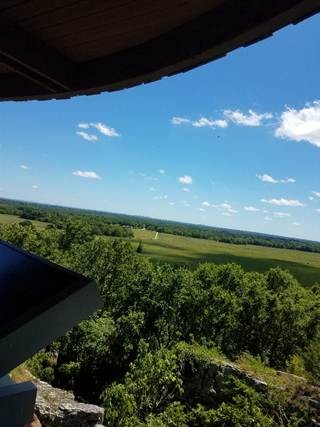
(Photo description and credit: This Overlook Shelter on the top of Elkhorn Mountain provides a sense of being a watchman as you look down on a now peaceful Civil War battlefield. Credit: R. A. Stites, Pea Ridge National Military Park, May 2019.)
[1] Learn more about the painting’s history The Night Watch | By Rembrandt, Painting, (1642), History, & Facts | Britannica or enjoy a short lecture from the Kahan Academy at Rembrandt, The Night Watch (video) | Khan Academy.
[2] Topical Bible: The Role of a Watchman
[3] Psalms 130 — Bible Study In-Depth Teaching Commentary by OnlineGiving.org
[4] Ibid.