A Bold and Comforting Fear
Ruth Ann Stites, Staff Writer
One of the most frightening scenes in any movie is “the shower scene” in Alfred Hitchcock’s Psycho. Embezzler Marion Crane (played by Janet Leigh) checked into the Bates Motel one rainy night. Following dinner with motel proprietor Norman Bates (actor Anthony Perkins), Marion decides to return the money she stole. In her preparation to go back to Phoenix and confess to her employers, she decides to take a shower. Being murdered by a knife wielding, shadowy figure is her last act on earth. Her fear is tangible as her terrified screams echo while she is stabbed to death.[1]
The talented director, cast, and crew draw us into the weird fictional world of Norman Bates in all its fearful detail, but it is the rare person indeed who has not had a close brush with fear inducing reality. Of course, not all fears are equal. From a sudden, loud noise assaulting your ears; an accident on the highway; a bout with a deadly disease, an army descending on your country to kill, pillage, and burn; to a gunman pointing his weapon at your head, fear is one of the shared experiences of humankind. Not only do fears differ in intensity, but they also differ in impact. Some we can laugh at, some we never forget, and some haunt our every moment, disabling and debilitating the lives of those who have experienced them. So, we should not take the word “fear” lightly, especially when it is directed toward God. We need to understand what Scripture means by this terrifying word, especially when applied to the most powerful Being in time and eternity.
The “fear of God” is a concept explored in both the New and Old Testaments. In Hebrew the word for the kind of fear Janet Leigh portrayed in Psycho would likely be pachad (actual dread, terror, and trembling). A different word, yirah, is used for the “fear of the Lord.” While, because of its root, yare (fear), it can mean to fear or be afraid as well as revere. The primary meaning of yiah in the Old Testament is to be in awe, to reverence and honor God, to respect His majesty. Additionally, it points to humility and devotion to God as the foundation to wisdom and moral living. Finally, it deals with drawing near to or in alignment with the Lord. It refers to a covenant relationship drawing God’s people to Himself as they walk in His ways and keep His commandments because He is holy and His people respect and are drawn toward Him.
The New Testament writers faced a word problem when they wished to write in Greek about the fear of the Lord because the language does not contain a word for fear as reverence for God (or even the gods) as Hebrew does. The word they chose to work with was phobos meaning flight, dread, terror, panic, to run away from danger in fear. So, rather than running to God, the Greek word directed them away from Him. Their solution was to follow the lead of the translators of the Septuagint, the Greek version of the Hebrew Scriptures compiled in Alexandria, Egypt, by Jewish rabbis in the 3rd century BC.[2]
These learned scholars forced a new meaning on phobos used in the construction “fear of the Lord” by consistently pairing it with the Greek word for Lord, Kyrios in such passages as Psalm 34:11, “Come, my children, listen to me; I will teach you the fear [phobos] of the Lord [Kyrios].”
Using this accepted translation construction, New Testament writers moved the concept of fear from terror to reverence, from running away to running toward. English translations rightly use “fear” in passages like Luke 1:50, Philippians 2:12, and Revelation 14:7, but with the same “theological overwrite” the original New Testament authors employed.
I like the way John Piper summed up the essence of the concept of fear of the Lord in the following illustration:
Or here is one last image, and I love this one, because I love the picture of a big, holy, sovereign, majestic God. So I picture myself climbing in the mountains, say the Himalayas. And I’m on these massive rock faces, and I see a storm coming. It is going to be a massive storm, and I feel unbelievably vulnerable on these mountain precipices. And so, I am desperately looking for a little covert in the rock where I won’t be blown off the side of the cliff to destruction.
And I find a hole in the side of the mountain, and I spin quickly, and suddenly the holiness, and justice, and power, and wrath, and judgment of God breaks over me like a hurricane, but I know I am totally safe, which means all that horrible danger is transposed into the music of majesty, and I can enjoy it rather than fearing it. And I think that is what the cross is. Jesus died for us to provide a place where we could enjoy the majesty of God with a kind of fear and trembling and reverence and awe, but not a cowering fear.[3]
David understood the nature of fear as a warrior who knows the perils of battle. He also understood the kind of fear that even the mention of God’s name should bring. Psalm 86 says in verse 11, “Teach me your way, Lord, that I may rely on your faithfulness; give me an undivided heart, that I may fear your name.” But that one greater fear lays all other fears to rest, if we embrace what it truly means to fear the Lord. In the 19th century, the “Prince of Preachers,” Charles Haddon Spurgeon, wrote, “The fear of God is the death of every other fear; like a mighty lion, it chases all other fears before it.”[4] Placing ourselves in right relationship with God, being drawn to Him by the majesty of His name, we become part of the worshipful multitude around His throne as we sing the “new song” of praise due to Him (Ps. 96:1; Rev. 5:9-10; 14:3).
How should we apply the fear of the Lord to our prayers? David gives us the essential answer in Psalm 86:11 as he tells us how to embrace the wonderful fear God’s name should invoke. We need to ask our Lord to teach us so that we may “rely on your faithfulness.” Then David asks God to give him “an undivided heart.” So many things tempt us toward a divided heart. Even Saint Paul had to deal with this temptation, “For I know that good itself does not dwell in me, that is, in my sinful nature. For I have the desire to do what is good, but I cannot carry it out” (Rom. 7:18). Just as Paul did so many years later, “…David recognized that he couldn’t recognize truth or be devoted to God entirely — unless God taught him and unless God gave it to him.”[5] You may recall the story recounted in Mark 9:14-29 of a father who brought his son to Jesus because the boy was “possessed by a spirit that has robbed him of speech” (v. 17). As Jesus questions the father about his son, He asks an implied question, “Do you believe I can do this?”[6] The father replied, “I do believe; help me overcome my unbelief!” (v. 24). So often we need to cry out in our prayers the same, help me for my belief is too small to stand on its own! And the Lord’s answer is always the same, He performs the miracle anyway!
Reflection Questions:
1. What are some of your frightening experiences? How have they impacted your life? What perspective do those experiences give you on what it means to fear God?
2. Knowing more of the background of the translation into English of the Hebrew and Greek words for fearing God, has your view of what it means to fear the Lord changed? If so, how?
3. Usually when we encounter something we fear, we want to escape it. What are some of the ways people escape fear? The idea that fear of the Lord is supposed to be embraced, to draw us toward, to build community, to fuel worship seems counterintuitive to our earthly experience with fear. Does being drawn toward the fear of the Lord change your view of your relationship with Him? Why or why not?
4. Have you ever thought of how you can use prayer to address David’s request for an undivided heart in your own experience? Have you ever thought of an undivided heart as a gift from God? How can you be a good steward of such a precious gift?
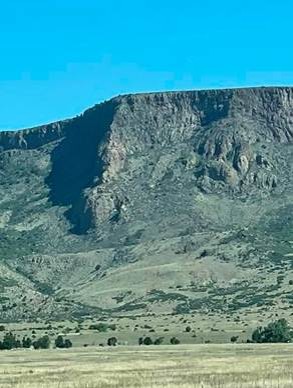
(Photo description and credit: Piper’s illustration of God’s protection should call to mind Elijah’s encounter with God in the wilderness recounted in I Kings 19 and Moses on Mount Sinai seeing God pass by described in Exodus 33:18-23. This photo of a high desert mountain evokes those accounts of encountering the Lord. Credit: Sandy Swanner, August 2026)
[1] For more on the movie Psych (1960), its making, and the innovative photography of “the shower scene” including filming the movie in black and white see: Psycho (1960 film) – Wikipedia, Psycho shower scene – Wikipedia, and Is Psycho’s shower scene the greatest in cinema history? – BBC Culture.
[3] What Does It Mean for the Christian to Fear God? | Desiring God
[6] The father said to Jesus in verse 22, “But if you can do anything, take pity on us and help us.” Jesus replied in verse 23, “‘If you can’?” said Jesus. “Everything is possible for one who believes.”